Wednesday, December 24, 2008

Puddings from the John Hoyle Cookery Collection


In the Everylady's Cook-book (641.5994/120) published in 1938, Miss Drake suggests that as well as cooking the traditional Plum pudding 'because it is part of our Empire inheritance' we should also consider a Fruit and Nut Jelly or 'the 101 degrees in the shade Christmas Pudding', a mixture of raisins, walnuts, almonds, cherries, nutmeg, cinnamon and spice set in an amber jelly made with plenty of fruit juice or wine.


If you are looking for the Christmas Pudding which won first prize at the Melbourne Show you will need to consult Mrs. Floate's "secret of success" Cookery Book. Volume 2 (641.5994/141) published in 1945. Her secret seems to be the appropriate use of suet as well as figs, dates, orange marmalade, treacle and 12 eggs!

For something a little more complicated you may like to consult the 1939 edition of the Green and Gold Cookery Book(641.5994/140), first published in the 1920s, for the Happy Day Pudding.

Take two or more children, according to taste, one skyful of sun, one lawn ( fresh and green ), four trees ( shady ones preferred ), one nursemaid ( out of sight). Take the children, mix well with an armful of dolls, reins, rubber balls, one puppy, one tent, and one rocking horse. When mixed, sprinkle all over with smiles and a pinch of unselfishness. Keep stirring till sundown, then take the children, put in a cool room, cover lightly, and leave till morning.

Monday, December 22, 2008

Mark Catesby's Natural History of Carolina...


In 2001 the NSW Parliamentary Library raised over $500,000 through the sale of material from their collections. At the time the State Library was offered a number of significant items including the third edition of The natural history of Carolina, Florida, and the Bahama Islands ( RB/F/374-375) published in 1771.
The hand-coloured engravings in these beautiful volumes were created by English artist and naturalist Mark Catesby (1683-1749) who spent many years in North America drawing and documenting the animal and plant life.
The Catesby Commemorative Trust has produced a film on the life of Mark Catesby.


The Curious Mister Catesby from David Elliott on Vimeo.

The Catesby volumes were a significant addition to the impressive collection of works on ornithology already held by the Library including works by Audubon, Gould, Levaillant,Latham,Buffon and Lewin.

Monday, December 1, 2008

Thefts at the British Library

An article from the Guardian in the UK from November 21, 2008, describes the theft of single leaves from rare printed works in a number of Libraries in the UK, including the British Library and the Bodleian.
According to the article
'Using electronic records, they found all the British Library members who had taken out the book and then examined other works these people had had contact with. They discovered that other works detailing the same periods in history and covering European engagement to the area from modern-day Syria to Bangladesh were also damaged.'

Without the ability to electronically request, circulate and examine transaction data on our collections how easily could we follow the trail of a suspected thief?

Wednesday, November 19, 2008

Handle this Book!

In Handle this Book! the New York Times describes the presentation of rare books and manuscripts to History undergraduates. There's nothing like the smell of old books, the sound as you flick through the pages of a book made from cloth paper or reading the scribbled notes and signatures of previous owners!

This is the untidy scrawl of a previous owner of the 1640 edition of Parkinson's Herbal held in the Richardson Collection (263F). William Hopkins has practised his signature numerous times on the last page of the volume but what was he thinking when he scrawled the following lines...?
'Remember well and bear in mind
a faithful friend is hard to find
but how to find a friend so just
is first to try and then to trust'

Virtually recreating the Library of Sir Hans Sloane

A Press release from the Wellcome Trust and the British Library has announced the availability of the Sloane Printed Book Catalogue. This is a virtual reconstruction of the Library of Sir Hans Sloane ( 1660 - 1753) , one of Britain's most important collectors and founder of the British Museum. The comment by Alison Walker, Lead Researcher of The Sloane Printed Books Project...' We can learn much about Sir Hans Sloane, his career, and the intellectual and scientific circles in which he lived by looking at what material he acquired and how it was used, ' reminds us of how important it is that we continue the work from the David Scott Mitchell Project and include the provenance of items in our electronic records, particularly when they are related to significant people in the Library's history and the development of Australia.

You can read about the collection and the project from the website. The detail on identifying and interpreting the provenance of items is interesting. I know I have seen items in the Library's collections with this British Museum stamp. If we looked closer would we also find a Sloane shelfmark?
On a lighter note, did you know that Sir Hans Sloane 'discovered' Milk Chocolate?

Sunday, November 2, 2008

An interactive timeline

This commercial site developed by Jeremy Norman has an amazing amount of information about the history of science, medicine and information. According to the 'blurb' on the site 'Historyofscience.com is more than a bookselling site. It is also about the culture of collecting the history of science, medicine, and technology.'
An interactive timeline now available on the site. It is a great resource for bits and pieces on rare books, printing, publishing!
Did you know that the first known medical work was printed in 1457. The Bloodletting calendar apparently listed the unlucky and lucky days to have your blood drained!

Saturday, October 25, 2008

Charlie Cheesecake

The eRecords project will no doubt identify some rare and important items. The project will also bring to light curiosities and charming examples of how life used to be. In the Adventures of Charlie Cheesecake young children are warned not to go swimming straight after eating, are cautioned about hanging out the train window and not looking both ways before they cross the road.
We have two copies of this title. One is located with Children's literature the other copy with Children's health & hygiene. I'm not sure the modern advertising Executive would choose Cheesecake for the family name of the main character in a child safety campaign!
In the images below the author Marjorie Hann warns children not to run around with sharp objects in their mouth! Excellent advice!


Monday, October 13, 2008

I See Dead People's Books

LibraryThing has a group called I See Dead People's Books
'Description: A group for those interested and involved in entering the personal libraries of famous readers into LibraryThing as Legacy Libraries.'
Amongst the list of complete and incomplete libraries is one for Alfred Deakin. You can see a description of the Project which is based on a list held by the National Library of Australia.
Could this facility help to gather collections 0f other important Australian people? Books once owned by Ludwig Leichhardt, Samuel Marsden, Henry Gurner that have now been dispersed.
Just one thing from LibraryThing that I am not quite clear about. How can you find out the details of the item that have been added to the Legacy Library - which individual or Library holds the title?

Wednesday, October 8, 2008

NYPL Digital Gallery


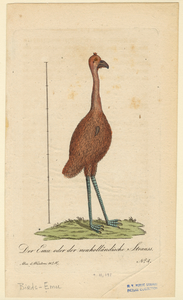
Looking for a Christmas gift or a new way to provide access and gain revenue from collections? The New York Public Library is redesigning their Digital Gallery. You can view the Digital Gallery Redesign Preview or take a look at Der Emu oder der neuholländische Strauss. (1803-1805) use the buttons at the top to resize, select and then create your own unique emu coffee mug!

Thursday, September 11, 2008

This book is a real stinker!

Bloomsbury Auctions in New York has a really interesting item for sale. Full calf binding with an elaborate blind-tooling!

Wednesday, September 3, 2008

Fight to stop rare books sell-off

According to an article on BBC News live, Tuesday, 2 September 2008, 'Cardiff Council could eventually sell up to 18,000 items dating from the 15th Century at auction to raise money for improvements in library services.'

Is this a dangerous trend? In 2003 Oriel College at Oxford University sold their copy of Shakespeare's First Folio to pay for building repairs and textbooks.

Friday, August 29, 2008

Wound man


This image of the Wound man is taken from the Library's copy of Feldtbuch der Wundartzney, by Hans von Gersdorff. Our copy was published in Strassbourg in 1540 although the first edition was published in 1517. Feldtbuch der Wundartzney is a medical text written for military surgeons. Along with illustrations of amputations, trepanning, cauterizing and palmistry we find the image of the Wound man which illustrates the various wounds suffered in battle or in accidents. The original woodcut was possibly drawn by Johannes de Ketham who published the first printed medical text Fasciculus Medicinae in 1491.
Hannibal Lecter, in the novel Red Dragon, uses the illlustration of the Wound man as a model for the arrangement of the body of his sixth victim.
From the call number, MRB/ Q617.99/ G (16th Century), you can see that this item is from David Scott Mitchell's original bequest and doesn't quite fit that obsession with Australian History.

Sunday, August 24, 2008

An anastatic diversion

An authentic anastatic facsimile of the original handwritten 1776 Declaration of Independence has been rescued from obscurity... an anastatic facsimile?
It's not quite Web2 but the EX-LIBRIS-L listserv often carries interesting stories like this one!

Sunday, August 17, 2008

Project update 25 - Conclusion

This week I am finalising the report for this project...but if you don't mind I won't be closing the door on the rare books collection. I'll keep blogging. Please keep checking for updates although they may not come as frequently!


I'll post the report once it is available for circulation.

Sunday, August 3, 2008

Project update 24 - Australian rare books

This project has been looking at issues and ideas around improving access to our rare printed collections from Australia as well as overseas.

The State Library holds the most important collection of Australian rare books in the country including a number of Australian firsts; the first book printed in Australia, The New South Wales general standing orders, 1802, several complete runs of the first newspaper in Australia, The Sydney Gazette and New South Wales Advertiser, the first illustrated book, Birds of New South Wales, with their natural history by John William Lewin, 1813.

The launch this week of the First Fleet collection online has included material from the earliest published accounts as well as manuscripts of journals and correspondence including a rare edition of an account by an Officer which is held in the Dixson collection (DL 78/68). Only two copies are known to exist.

The Sirius & Supply in Jackson's Bay from An authentic and interesting narrative of the late expedition to Botany Bay : as performed by Commodore Phillips and the fleet of seven transport ships written by an officer…1789.

Friday, August 1, 2008

Spanish diversion

Created on the verso of a vellum leaf from a medieval choirbook, this scene of courtly life was produced by the 'Spanish Forger' around 1890 - 1910. The artist's real name is unknown. The term 'Spanish Forger' was applied to the artist as the first forgery identified had been earlier attributed to a painter active in Spain. Over 200 items have been identified as the work of the 'Spanish Forger'. The daring décolletage of the ladies and the pouty lips are a little too obvious for a medieval damsel and the folds in the gowns don't quite flow! But analysis of the inks used in many of the works has also identified these works as modern forgeries. The emerald green ink contains a copper arsenite pigment not available until after 1814.
The library's example from the 'Spanish Forger' ( RB/MSS 97 ) was purchased in 1991.

Wednesday, July 30, 2008

Remnant Trust diversion

'The Remnant Trust is a public educational foundation that shares an actively growing collection of original and 1st edition works dealing with the topics of liberty and dignity with some pieces dating as early as 1250. The Trust makes this collection available to colleges, universities, and other organizations for use by students, faculty, scholars and the general public. Those exposed are encouraged to touch, feel and read the originals.'
Is this an idea for some of our duplicate collections? Touch and turn the pages of Australian icons?
For more information you can refer to the Remnant Trust website.You can also view this Youtube example of a Remnant Trust exhibition at the University of Mississippi


Monday, July 21, 2008

ISTC diversion

I've been looking through a list of material on book production displayed in 1965. The list, arranged by H.G. Kaplan, does not include any location numbers and some of the items are proving difficult to trace.
Many of the incunabula do not have online records on our catalogue but, curiously, I can find them on the Incunabula Short Title Catalogue on the British Library website.
'The ISTC records nearly every item printed from movable type before 1501, but not material printed entirely from woodblocks or engraved plates. 29,777 editions are listed as at January 8th 2008, including some 16th-century items previously assigned incorrectly to the 15th century.'
There are around 198 titles on the ISTC from the State Library although locations are not included.
This image is from Glossa Magistralis Psalterii by Petrus Lombardus ( 1095 - 1160) , printed in 1478 by Frisner and Sensenschmidt in Nuremberg. The title is listed in the scanned card catalogue but has an incorrect location number.
'Peter Lombard', a scholastic theologian of the twelfth century, was appointed Bishop of Paris in 1159. The caption for the display suggests state that:
'The book here displayed is rare in any condition; the freshness of the illuminations, the paper, and the binding make it a well-nigh unique example of a 15th century book, fresh from the binder.'

Wednesday, July 16, 2008

Project update 23 - A Capital visit

This week I visited the National Library in Canberra to discuss the management of their printed book collections. I spoke with staff who have worked with the collections for a number of years. The rare books collection at the National Library was formally established in 1962 although elements of the collections were acquired as early as 1934 with the Alexander Dalrymple Collection. A few observations from many...
  • They have just as many prefixes as we do!
  • They encourage clients to use digital cameras.
  • They have an automated request and circulation system for material issued in the reading rooms and therefore have statistics on collection use.
  • The bar code for an item is printed on the call slip and can be scanned directly to circulate the item. The item itself does not necessarily need to have the bar code attached to the item.
  • The National Library has a new Digital collections feature on their website with a section highlighting digitised books & serials.

Friday, July 4, 2008

Book theft diversion

You may have read about the map thief, James Lyman Brubaker. A press release has been issued by the Department of Justice in Montana. Don't you just love the phrase " interstate transportation of stolen property" - it makes you nostalgic for those old episodes of FBI!

Sunday, June 29, 2008

Project update 22 - Collection valuation

The Library's rare printed collections are conservatively valued at over $80 million. One of the easy tasks throughout this project has been identifying some of the rare and valuable items in the collection which had not beeen included in the Collection Valuation in 2005. Here are just a few of my favourites that will be included in the 2010 Valuation.

George Ruxner
Anfang, vrsprung vnnd herkōmen des Thurnirs in Teutscher nation
[Siemern : H. Rodler, 1530]
This is the first edition of the famous Book of Tournament by the Palatine herald Georg Ruxner. The volume provides information on the origin and ritual of 36 tournaments in Germany and Switzerland, with descriptions and lists of participants. There are over 200 woodcuts illustrating scenes of the dances and festivities that were as essential as the fighting as well as descriptions of the coats of arms of notable warriors.

MRB/ Q394.7/ R (16th Century)


Thomas L. M'Kenney and James Hall
History of the Indian tribes of North America : with biographical sketches and anecdotes of the principal chiefs ...
Philadelphia : F. W. Greenough, 1838-1844
Thomas McKenney (1785-1859) served as Commissioner of Indian Affairs 1824-1830. He commissioned and collected portraits of Native Americans for his Gallery in the War Department with the goal to publish a record of vanishing peoples including portraits and biographical sketches. The first issue of History of the Indian Tribes of North America was published in three volumes between 1836 and 1844. This is a beautiful example of hand-colored American lithography and is one of the earliest collections of Native American portraits. Digital images of the volumes are available online at the University of Cincinnati. DSM/ F970.3/M SET

R. Bougard

The little sea torch ; or, True guide for coasting pilots
London : Published for the Author, by J. Debrett ..., 1801.
This volume contains 34 coastal profiles on 20 hand-coloured aquatint plates. It also includes 24 hand-coloured charts of ports. This is the first and only edition of this work for coastal navigation. It was translated by Thomas Serres from René Bougard's Le Petit flambeau de la mer. SC/ F29


Wednesday, June 25, 2008

Project update 21 - E- record status

The Library has recently received funding to create electronic records for the Library collections. ( A press release can be viewed on the Library website). I have been gathering information for the project on the status of electronic records in the Rare books & Special Collections in the State Reference Library. The question is not just if there is an electronic record but is the electronic record good enough? Is it only an interim record created to record the existence of an item or does it provide a useful access point to the collection? Does it have a subject heading, a physical description or any provenance information? Many of the electronic records that do exist for our rare printed collections are only interim records.

This week I discovered that the Richardson collection holds a rare early herbal printed in England in 1527. I found it as I trawled through a long list of items that were only identified through a Richardson call number search. If you were looking for a herbal you wouldn't find it through any keyword search! The record for RICHARDSON/B282 is brief ! Herbals were important in medieval times as they described the appearance, medicinal properties, and other characteristics of common plants.


The Vertuose bok
e of dystyllacyon of the waters of all maner of herbes with the fygures of the styllatoryes ... is a translation by Laurence Andrewes of Liber de arte distillandi de simplicibus, first published at Strassburg in 1500. It describes the method of distilling herbs, in order to make use of their medicinal properties or virtues. The numerous woodcut illustrations include pictures of stills and distilling equipment as well as numerous illustrations of plants and flowers known for their medicinal properties.

On the trail of a perfect example of an "interim" record I headed to stack. There it was hidden in the depths of a lovely blue cardboard box not known for it's acid free qualities. Even better the Vertuose boke was still wrapped in the brown paper wrapper in which Henry Richardson received the item from the bookseller in 1922!

Henry Richardson was an Englishman who had an extensive collection of early bibles, printed works and manuscripts. During the First World War Australian troops were stationed on his property in Weymouth, Dorset. He entertained the army chaplain and many of the officers. As an expression of his gratitude for the support from Australia during the war he decided to donate his collection to a suitable institution in Australia. The Public Library of New South Wales received the bulk of his collection in 1926. Although the agreement with the Library was made in 1919 Richardson continued to collect rare and valuable items up until 1924 knowing that they were being purchased not just for his benefit but for Australia!
Anyway, here is the 1527 herbal without a binding or title page, wrapped in a lovely acid-full brown paper wrapping. You can still read the personal notes written by Richardson and the bookseller's catalogue entry.

Thursday, June 19, 2008

Latin diversion

In 1971 the Library advertised for a Special Collections Librarian - “Applicants must be fully qualified librarians with an appropriate degree and should have at least a working knowledge of Greek or Latin and another foreign language" – R.F. Doust
N0 need to panic - the National Archives Office has an online
beginners' guide to the Latin used in documents between 1086 and 1733.

Monday, June 16, 2008

Project update 20 - Frank Heyner

Last week I received a request for information on Frank Heyner. The request came from Sylvia Holton Peterson who is undertaking a census of the Kelmscott Chaucer, published in 1896. The Library's copy of The works of Geoffrey Chaucer newly imprinted is bound in kangaroo skin and blind tooled with an ornamental design of grapes and leaves which replicates some of the detailed woodcut borders on the internal pages designed by William Morris. The binding was the work of Frank Heyner, who was "superintendent" of the bindery at the Mitchell Library, from around 1915.


Not surprisingly information files on Frank Heyner were scarce but Arthur Easton found a manuscript item ( A7143) which contained some wonderful examples of Frank Heyner's work. According to the accompanying article from the British & Colonial Printer & Stationer, March 30, 1916, nine panels completed by Heyner were included in the official exhibit sent by the NSW Government to the Panama - Pacific Exhibition at San Fransisco in 1915. The display of book bindings won a gold medal. Heyner used local flora to create the distinctive designs. Heyner was born in London in 1885, the son of a well-known London binder, Mr A.O. Heyner, of Islington.


You may find some of Heyner's wonderful bindings in the collection. They can be identified by his initials "F.H" at the bottom of the back inside cover.

Monday, June 9, 2008

Project update 19 - A Dixson safe item

Sir William Dixson's printed book collections include significant works on the history of Australia including the exploration of the Pacific. His collections also include some very rare European publications printed in the fifteenth and sixteenth centuries. They are often distinguished by fine bindings in excellent condition.
De magnis coniunctionibus by Abalachus Albumasar was printed in Augsburg in 1489 (Dixson Safe/48/1) . This thesis on the creation of the universe was developed by Albumasar, a ninth-century Arab astronomer. Albumasar believed that the Creation occurred when the seven planets were in conjunction with the first degree of the constellation Aries, and that the world would end when they were in conjunction with the last degree of Pisces. The printer, Erhard Ratdolt, was well known for his publication of early scientific works.

Tuesday, June 3, 2008

Project update 18 - Writing in RB stack plus...

It's hard not to be distracted from writing when the voices of long gone authors, printers and binders call from the shelves...so here are some online distractions...

A Rare Books blog
Rare Book collections @ Princeton

A Curator's instant messaging service
Special Collections & Rare Books - University of Minnesota

An interesting blog entry on a talk given by Richard Ovenden, Keeper of Special Collections at the Bodleian Library from the Archives Hub Website- Revolutionising access to the archives of UK universities and colleges
Archives Hub Blog - A very rare thing!

Sunday, May 25, 2008

Project update 17 - Report writing and Charles I

I am now gathering the information I have collected over the past months to produce a report. However, it is hard not to be distracted...
The Library holds a large Book of Common Prayer, 1633 (RB/LQ/3), according to an inscription in a contemporary hand, the bible was owned and used by Charles I (1600 - 1649).


The bible was donated to the Library after being kept by the Braham family for over a century.
To prove the provenance we would have to start from the latest known information as we would with genealogical research....but there wouldn't be any certificates or registry entries to confirm the ownership trail. Can this detailed provenance research be undertaken with the limited resources that we have? It would be fun but how cold is the case? We have a similar example in the Mitchell collection - A smaller Book of Common Prayer, 1639, reputedly owned by Bishop Juxon of London, who attended Charles I on the scaffold with this Book of Common Prayer.

Provenance aside, the Library has a fascinating collection of material on the life and times of Charles I. We also have a sample of his blood and multiple copies of the Eikōn basilikē . It isn't Australian history but could this fascinate the general public? Could this type of exhibition show the depth and breadth of the Library's collections for international not just Australian research?

Thursday, May 22, 2008

What is a "rare book" diversion

It may be a bit late in the history of this project blog but here are a few definitions of a what makes a "rare book"
The National Library of Scotland
American Museum of Natural History
Rare Books and Manuscripts Section (RBMS) of the Association of College and Research Libraries

A "modern" rare book in our collection...
Howl : and other poems by Allen Ginsberg (RB 2371) was published in 1956. This is the first printing of one of the most important examples of Beat Poetry. Our copy is also signed by Ginsberg
Howell by Allen Ginsberg on YouTube

Saturday, May 17, 2008

valuation

This week I have been looking at policy & procedure for managing rare printed material in the Library.
The Dewey Decimal system was phased in by the Library in the early 1900s. Before Dewey a fixed location scheme was used to organise the collection into ten large subject fields.
A – Natural Philosophy, Science, Mathematics, Fine Arts, Industrial Arts and Trades
B – History, Chronology, Antiquities, and Mythology
C – Biography and Correspondence
D – Geography, Topography, Ethnography, Voyages, Travels and Atlases.
E – Periodical and Serial literature, Reports and Newspapers
F – Jurisprudence, Politics, Commerce, Political Economy and Social Economy
G – Theology, Ecclesiastical History, Moral and Mental Philosophy and Education
H – Drama and Poetry
J – General Literature, Philology, and Collected works
K – Works of reference – Cyclopaedias, Dictionaries and Lexicons

You can still see the remains of the old classification collection on Level 3.

"Australasian" books were organised into similar divisions with an 'M' prefix.
The Letter M had nothing to do with the Mitchell Library, since its use pre-dated any thought of David Scott Mitchell's bequest. It appears to have been an unused letter between K and P!
Some of the old classification volumes were recatalogued to a Dewey location. When the Special Collections Branch was established in 1963 some of the old classification volumes were identified as rare and valuable. They were transferred into special collections and given an SC /running number location. Many of the old classification titles can only be located in the printed version of Public Library catalogue.

A location of G12S14 meant the 14th book on Shelf S of Press 12 in Class G. A Press would have been a wooden shelving unit or shelving bay.
You thought re-shelving items according to a few digits after the decimal point was difficult!

What's new at Houghton Library diversion

At the Houghton Library at Harvard University they use a blog to promote new acquisitions. It would be a great idea while we ...wait...for rss notifications on new acquisitions to be implemented for our clients!

Monday, May 12, 2008

Book collectors diversion

Shaken, Tawing , Harleian Style, Fingerprint, China paper, Dentelle....ever wondered about those terms in the booksellers' catalogues or needed to describe an item for an exhibition? The online version of the latest edition of ABC FOR BOOK COLLECTORS by John Carter as revised by Nicolas Barker is what you need. It includes over 490 alphabetical entries, ranging in length from a single line to several pages, defining technical terms used in book collecting and bibliography.

Sunday, May 11, 2008

Project Update 15 - Learning from others

It is interesting to see how other institutions provide online access to their rare special collections and how they highlight significant material through "online exhibitions"
Here are a few of my latest favourites...
Harry Ransom Center - The university of Texas at Austin has an information packed site which includes information on the history of printing based on their copy of the Gutenberg Bible. This is also useful for identifying significant material in our collections.
The Norman B. Leventhal Map Center at the Boston Public Library has a wonderful interactive site which provides access to their extensive map collections.
A Heavenly Craft - The woodcut in Early Printed Books at the Library of Congress isn't a bells & whistles interactive site but it has a lot of information and has been useful for identifying unique & significant material in our collections.
The Cornell University Library - Division of Rare and Manuscript Collections is always interesting. As we have lately been focussing on rare cookbook collections have a look at the Food, Wine & Culinary History section

Tuesday, May 6, 2008

Cook book diversion


Have you seen our latest media star? - Pat Turner discusses the rare cookbook collections with SMH's Good Living

Friday, May 2, 2008

Project update 14 - Council minutes and Mrs Krefft


In June 1860 Johann Ludwig Krefft was appointed Assistant Curator of the Australian Museum, then acting Curator and Secretary in 1861. Krefft was a well respected scientist and wrote over 150 papers. His major publications included The Snakes of Australia (1869) and Mammals of Australia (1871). After various disputes with the Museum Trustees, Krefft was dismissed and dramatically removed from the Museum premises on 21 September 1874. Krefft's wife had money problems after Krefft's death in 1881 and sold copies of Snakes of Australia and the Mammals of Australia to the Library.
The Library Council minutes for August 17, 1883 note that "the Librarian had caused one copy of the mammals, and one copy of the Snakes of Australia, purchased from Mrs Krefft, to be coloured as a specimen of work, to see if the trustees would sanction all of the copies obtained being coloured in the same style. ...the total cost for completing all of the volumes being about 30 pounds."
The Library holds multiple copies of Krefft's Snakes of Australia How many of our copies contain the original lithographs hand-coloured by the Scott sisters? Can we identify the copies hand-coloured by order of the Library trustees?

Monday, April 28, 2008

Another medieval Victorian diversion

In March I attended the Foxcroft lecture at the State Library of Victoria. The audio of the lecture is now available on the SLV website. They have also added a link to a video on making a medieval manuscript from the Fitzwilliam Museum at Cambridge University.

Project Update 13 - Sydney University and witchcraft

This week I have been working through 9 boxes of files from previous Rare books and special collections activities which have been stored in Rare book stack for years - probably since the move in 1988! One of the boxes contained records from exhibitions held at the Library through the 1970s and 1980s. In 1973 the Special Collections Librarian was also the Exhibitions Officer at the Library.
On Wednesday I went to Sydney University to speak to the Rare Books Librarian, Neil Boness. Neil was the Rare Books Librarian at the State Library before moving to the University in 1991.
The Sydney University Rare books website includes details on access, treasures and research guides. One of the interesting electronic exhibitions is Witchcraft, Demonology and the Inquisition.

There are a number of witchcraft books in the SRL rare books collection. A Confirmation and Discovery of witchcraft was written by John Stearne and published in 1648 ( RB/1900). John Stearne was an assistant to Matthew Hopkins, the self titled "Witch-Finder General". In one year,between 1645 -6, the pair were responsible for over 200 deaths in witch hunts carried out throughout the eastern counties of England. This copy is extremely rare as it includes a hand-written note by the author, John Stearne.

Monday, April 21, 2008

Botanicus diversion


The Botanicus Digital Library aims to improve access to scientific literature, by creating a freely accessible, Web-based encyclopedia of digitized 18th and 19th century botanical literature from the Missouri Botanical Garden Library. This site provides access to digitised images of important botanical works incorporating many of the features that we discuss on a regular basis - watermarking, keyword searching, appropriate meta data, copyright information. It also uses Web2 functionality to improve access through subject tag clouds, google mapping, worldcat links, RSS feeds and a blog which provides not just the latest news but background on digitisation techniques, equipment and issues. Lose yourself for while in this site. Find some titles (eg. Les liliacees by P.J. Redoute) that link directly to the State Library of NSW holdings.

A smelly diversion

Experts seek cure for books....
A researcher from Strathclyde University has teamed up with the British Library to design a method of "smelling" the chemicals given off by decaying paper, hoping the technique will lead to an easy way to test the "health" of valuable or ancient books and ensure their survival.

Sunday, April 20, 2008

Project Update 12 - Trends in rare book collection management

I am currently reading Trends in the rare book & documents special collections management report from the Primary Research Group in New York ( NQ 025.196/2). This study documents the results of interviews undertaken in November and December 2007. It profiles the efforts of academic, public and special libraries to develop, manage and market their special rare book and document collections. The institutions profiled in the report include Boston College, the Newberry Library, The San Antonio Public Library, Trinity College, San Jose State University, Huntington Library, the Buffalo & Erie County Public Library and the University of California, Chico. There are some interesting trends and issues included in the report including:

"most collections suffer from a lack of use and awareness by the largest potential audience - the general public or students. A strong web presence, active local programming, and maintaining communication with special interest groups... are crucial to making the collection a valuable, used resource by a younger, less experienced clientele, but are also important in making the collection materials available to researchers."

It's also time to consider rare book contenders for the Heritage Gallery 2009. How about the Art of War? De re militari, RB/SC/610Q, was originally written by Robertus Valturius in ca. 1446-1456. It is the earliest authority on mediaeval machines of war and contains 97 woodcuts of military engines and constructions, many full-page, and numerous woodcut ornamental initials throughout the text. The illustrations include numerous military engines: catapults, rams, cannons, grenades, scaling
ladders, water-raising machines, a clepsydra or water-clock (with 17 hours marked on the dial), bridges, rafts and paddle boats. The work was first printed at Verona in 1472. Our copy, printed in 1535, has some water damage but the illustrations are generally not affected.

Thursday, April 10, 2008

Library 2.0 project diversion

Just a note to say that this blog has been a joint venture to communicate and encourage discussion about the Rare books review but also as an investigation of Library 2.0 developments. The Library 2.0 pilot has been completed but the Rare or under done blog? will continue as an element of the Staff Fellowship. So keep logging on and feel free to comment online about any of the entries!

Sunday, April 6, 2008

Project update 11 - The Justice Wise collection

Last week the project lost out to activities with the Library's Foundation...although I did spend some time investigating the Justice Wise collection.
In 1865 Justice Wise presented the government with his library of Australian books, pamphlets and manuscripts, in trust, to be placed in a Free Public Library, as soon as one was established
( sounds like a familiar story?) Each book was stamped and then placed in the Australian Museum pending the opening of the proposed library.
The collection was particularly valuable as Justice Wise was one of the earliest collectors to focus on Australiana ( sounds like a familiar story?) At the time the trustees of the Australian Library and Literary Institution ( formerly known as the Australian Subscription Library) devoted their funds to English and European literature.
On 30 September 1869 the Free Public Library of New South Wales opened its doors to the public. On 15 October 1869, the Librarian, Mr R.C. Walker, requested the return of the collection from the trustees of the Australian Museum " in order that they may be placed in this institution for the use and benefit of the Public"
The original collection contained approximately 6,000 items. It is difficult to track the current status of the collection as only in recent years has the presence of the Justice Wise stamp been noted in the catalogue record. We can see from the printed catalogue published in the Australian Museum's annual report of 1865 that the collection held a number of rare and important publications including Barrington's Voyage to New South Wales, Collins' An account of the English colony in New South Wales, Flinders' A voyage to Terra Australis and early editions of the Sydney Gazette.


Description de l'egypte diversion

This week new items were installed in the Heritage Gallery. The Description de L’Egypte is the official record of the activities and discoveries made in Egypt during Napoleon's campaign between 1798 - 1801. You can only see one page at a time from a single volume in this display but go to
Description de L'Egypte online to view all of the images!


Sunday, March 30, 2008

Project update 10 - Melbourne calling

This week I travelled to Melbourne for the Medieval Imagination exhibition opening and a number of related events. On Wednesday night I attended the Foxcroft lecture by Professor David McKitterick from Trinity College, University of Cambridge. I also organised meetings with Special collections staff at the University of Melbourne and the State Library of Victoria.
Interesting observations from many:
  • All "Rare books" at SLV are housed in the one secure area including Australian pre-1850 and non-Australian pre-1800 items.
  • SLV have been purchasing duplicate copies of novels by key twentieth century authors for the RB collections - and they don't remove the bookjackets.
  • If SLV have duplicate copies of an item they nominate a preferred copy for issuing. Staff are trained to select the copy according to specific criteria eg. the copy with a Library binding rather than fine binding.
  • Neither institutions have linked online database records to individual hardcopy records for rare printed books eg. EEBO.
  • Both institutions place acid free strips in the volumes with location and barcode attached.
  • Both institutions have dedicated staff to manage rare printed collections.

Thursday, March 27, 2008

Medieval diversion

Now that was a good exhibition opening or was it just that SLVIC surpassed the SLNSW kpi for food & drink at an event?
As you can see from this fuzzy image taken on my mobile phone...this evening I attended the opening of the Medieval Imagination Exhibition at the State Library of Victoria. Yes, there were wandering minstrels and medieval knights. This medieval guard's name is Egfroth. The early rumour was that over 500 had accepted an invitation to the opening. Staff were asked not to bring partners and the Library genealogy centre was cleared to hold the overflow. Luckily, the weather may have affected the numbers. There was plenty of champagne for all and the venison pies, mini beef morsels with yorkshire pudding and quail thingies were excellent. There was also an eel dish which I avoided - along with the mead. Phil - I've asked for the menu!
Seriously - The Victorian Premier opened the exhibition in the Experimedia centre at the State Library of Victoria - adjacent to the Keith Murdoch Gallery. The exhibition is excellent with some wonderful examples of medieval books and illuminations. SLNSW has five items in the exhibition with over half of the 105 items on display from the manuscript collections of Cambridge University.

Monday, March 24, 2008

Project update 9 - Woodcuts and eBay

Historia Maioris Britanniae was written by John Major (or Mair) and printed in Paris in 1521. It is one of the earliest histories written concerning Scotland and Britain and contains the earliest printed account of Robin Hood. The title page includes one of the earliest woodcut illustrations of a printing press. Accessioned in 1965, SC 957 is still without an electronic record - our copy has a decorated fore-edge which includes the title of the volume.
Curiously you could have bought a copy of this rare volume on eBay. The reserve price was $2,001 US dollars and there were eleven bidders.
Right now you can bid on a 1588 edition of Historia delle stationi di Roma. So far there has only been one bid of 49 Euros!

Thursday, March 20, 2008

Novel diversion

When the Free Public Library opened in 1869 there was a conscious decision to remove novels from the shelves - clearly a bad influence on young people and time-wasters. Curiously the novels of Walter Scott escape the embargo. Sighted this week was an 1870 list of novels removed from the collections and sent to the Asylum at Rozelle for the entertainment of the inmates. The list included the dubious but fascinating titles of Rough and Smooth, Nanette and her lovers, Respectable Sinners, Tempter and the Tempted. Also included were "Austin novels" - Emma, Pride and Prejudice and Northanger Abbey and another subversive tale - The Last of the Mohicans.

Which leads me to a number of questions. Were these novels first editions? - a valuable loss! How do we select and preserve potential valuable or significant first editions for the future? eg. Did we purchase a first edition of any titles in the Harry Potter series - what condition are they now in? Do we purchase hardcover editions of new titles by significant authors - or paperbacks? We remove all book jackets from non-Australian titles thus de-valuing important titles. Finally, how many valuable first editions are lurking in the shelves unidentified and possibly heading out the door regularly on ILL?
A small example from a recent Bonhams sale. We do not have a hardcover edition of an early Tolkein - signed or not - although I remember clearly borrowing a copy from my primary school library!
Your thoughts?

( Arthur - No more files please...unless they refer to the Tangye brothers or George Chalmers manuscripts...)

Saturday, March 15, 2008

Project update 8 - Moore College Library

This Wednesday I went to Moore College Library. The Senior Librarian, Kim Robinson, talked about the collection and showed me some of his recent acquisitions and favourite pieces.
One of the reasons I wanted to see the college library was an intriguing line on their website -

The Library has a continuous history of book collection since 1856. With its Bray collection, originally given to the Port Jackson Lending Library in 1809, the Library holds some of the first public library books to come to Australia.

Hold on - what is the Port Jackson Lending Library and what about our claim to be the earliest library open to the "public" in 1826! When Reverend Samuel Marsden returned to England in 1807 he posted a notice in a London Newspaper asking for books for a public lending Library. The Society for Promoting Christian Knowledge sent over a collection of books. Each of the items had a standard printed book plate with "Port Jackson" hand written on the blank line before the title "Lending Library". Apparently they sent collections of books to locations around Great Britain and overseas so it wasn't so much an official title of the Library but a geographic location. The collection became part of the Diocese Library which was presented to Moore College in the 1950s.

One of the items Kim showed was Liber Epistolarum Sancti Hieronymi printed by Nicolaus Kesler in 1497. The Epistoles of Saint Jerome contains a famous woodcut by Albrecht Durer which depicts St. Jerome removing a thorn from the foot of a lion. On my return I checked our catalogues for the same publication. According to the card entry, LQ2/J was purchased in 1941 from a Miss Beale. It isn't in the best condition. The original stamped leather binding on wooden boards needs repair. Durer's woodcut is there on the verso of the first leaf. Our woodcut has a rough red wash to highlight the figure of St. Jerome.